In today’s fast-evolving world of electronics and portable devices, LiPoly batteries—short for Lithium Polymer batteries—have become a preferred power solution. Known for their lightweight structure, flexible design, and high energy density, LiPoly batteries are widely used in consumer electronics, drones, medical devices, and IoT systems.
However, understanding their safety guidelines, key features, and real-world applications is critical for engineers, developers, and users alike.
🔋 What Is a LiPoly Battery?
Unlike traditional lithium-ion batteries with rigid cylindrical casings, LiPoly batteries use a soft pouch casing and a polymer electrolyte. This unique construction allows manufacturers to design batteries in various shapes and sizes—perfect for compact and lightweight electronic products.
| Feature | Description |
|---|---|
| Voltage Platforms | Common configurations: 3.7V (1S), 7.4V (2S), 11.1V (3S), 14.8V (4S) |
| Energy Density | Approximately 620 Wh/L |
| Form Factor | Ultra-thin, customizable |
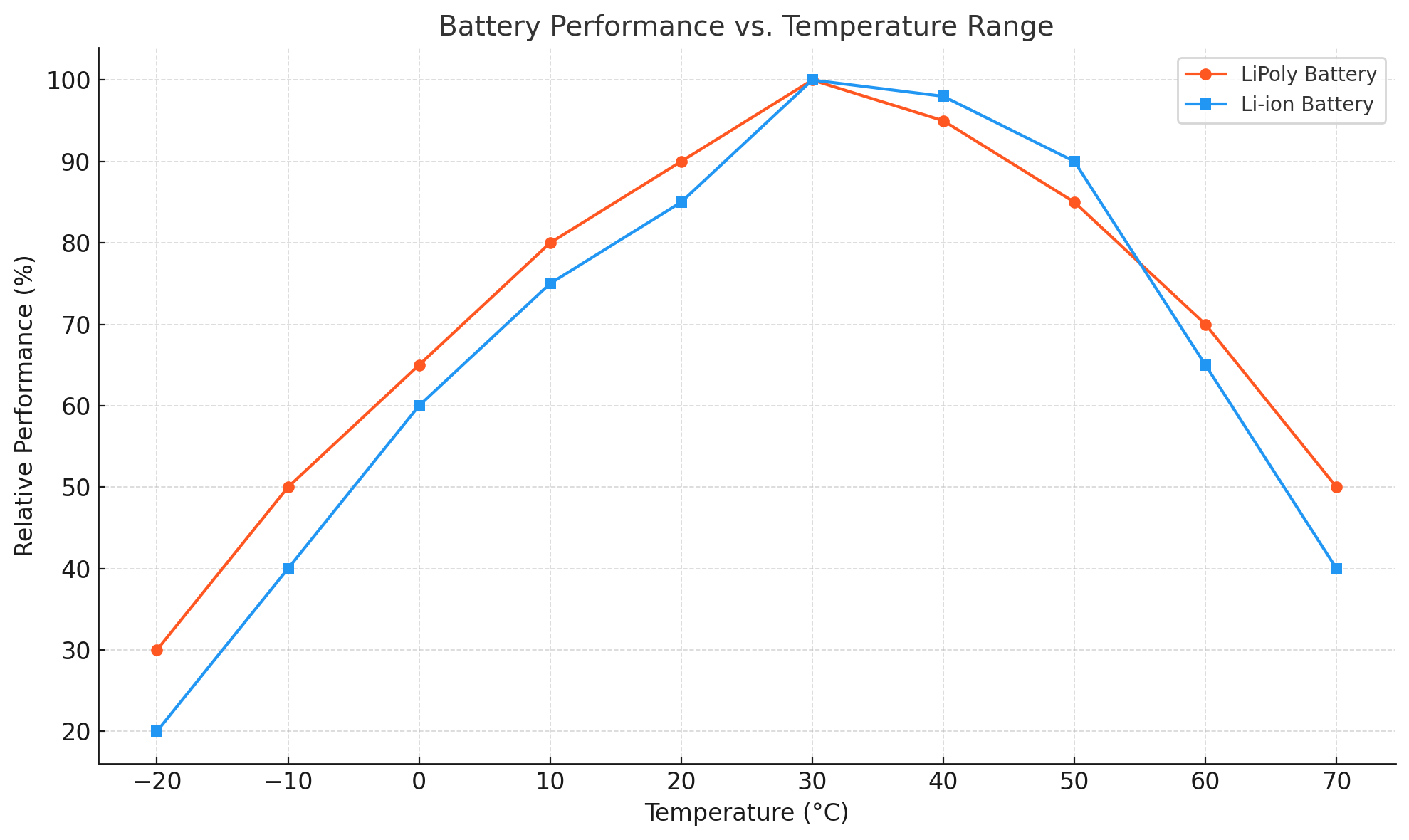
| Operating Temperature | Standard: 0°C to 60°C; Custom: -40°C to 85°C |
| Cycle Life | Over 500 full charge-discharge cycles |
📱 Common Applications of LiPoly Batteries
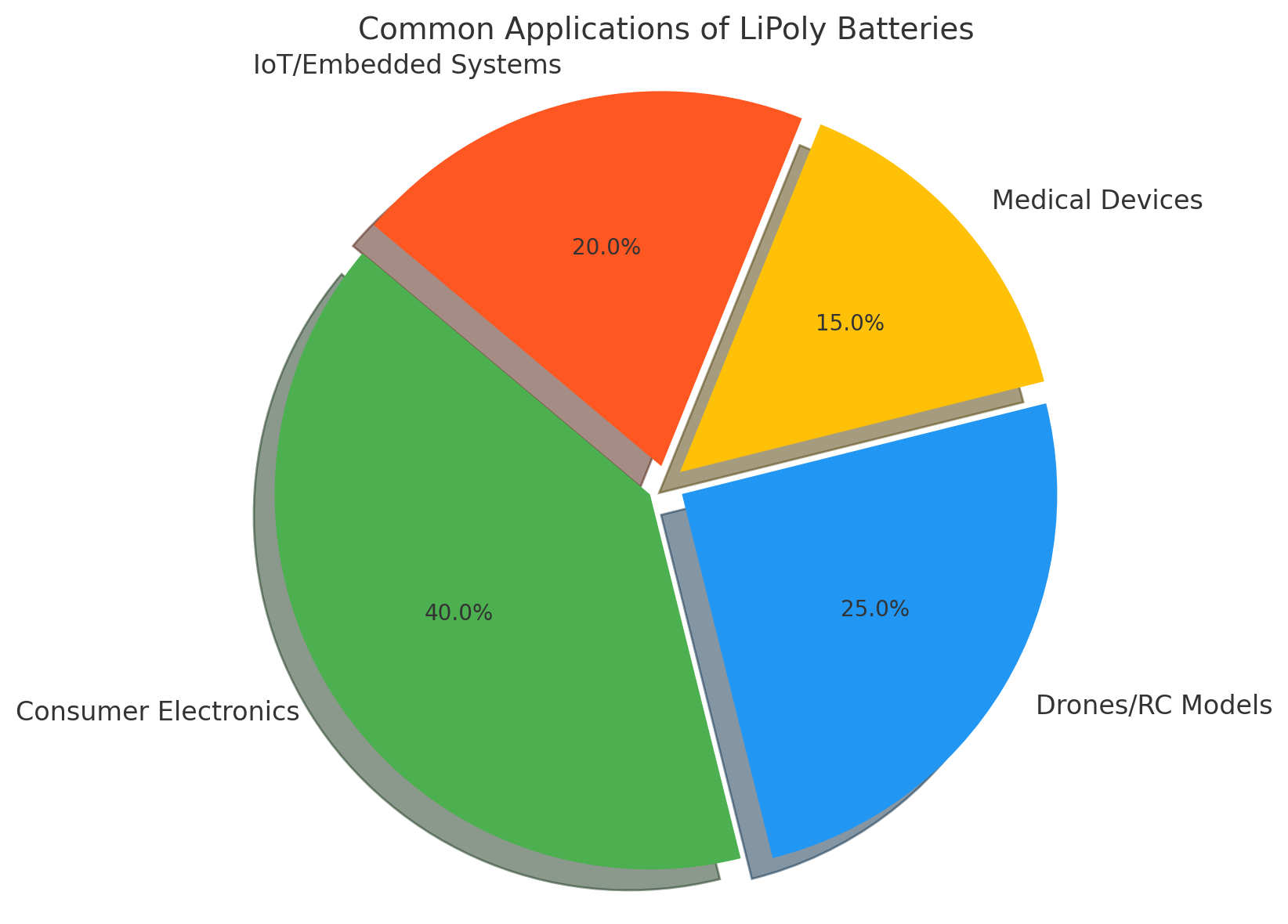
Thanks to their slim profile and flexible form, LiPoly batteries are widely used across multiple sectors:
1. Consumer Electronics
Smartphones and tablets
Bluetooth earbuds and portable speakers
Fitness trackers and smartwatches
2. Drones and RC Models
Popular in drones, quadcopters, and RC vehicles for their excellent energy-to-weight ratio.
3. Medical Devices
Ideal for portable medical tools like insulin pumps and wearable ECG monitors, offering compact power with reliable safety.
4. IoT Devices and Embedded Systems
GPS trackers, smart doorbells, and AI-powered edge devices benefit from the LiPoly’s space-saving and efficient energy design.
🔐 Are LiPoly Batteries Safe?
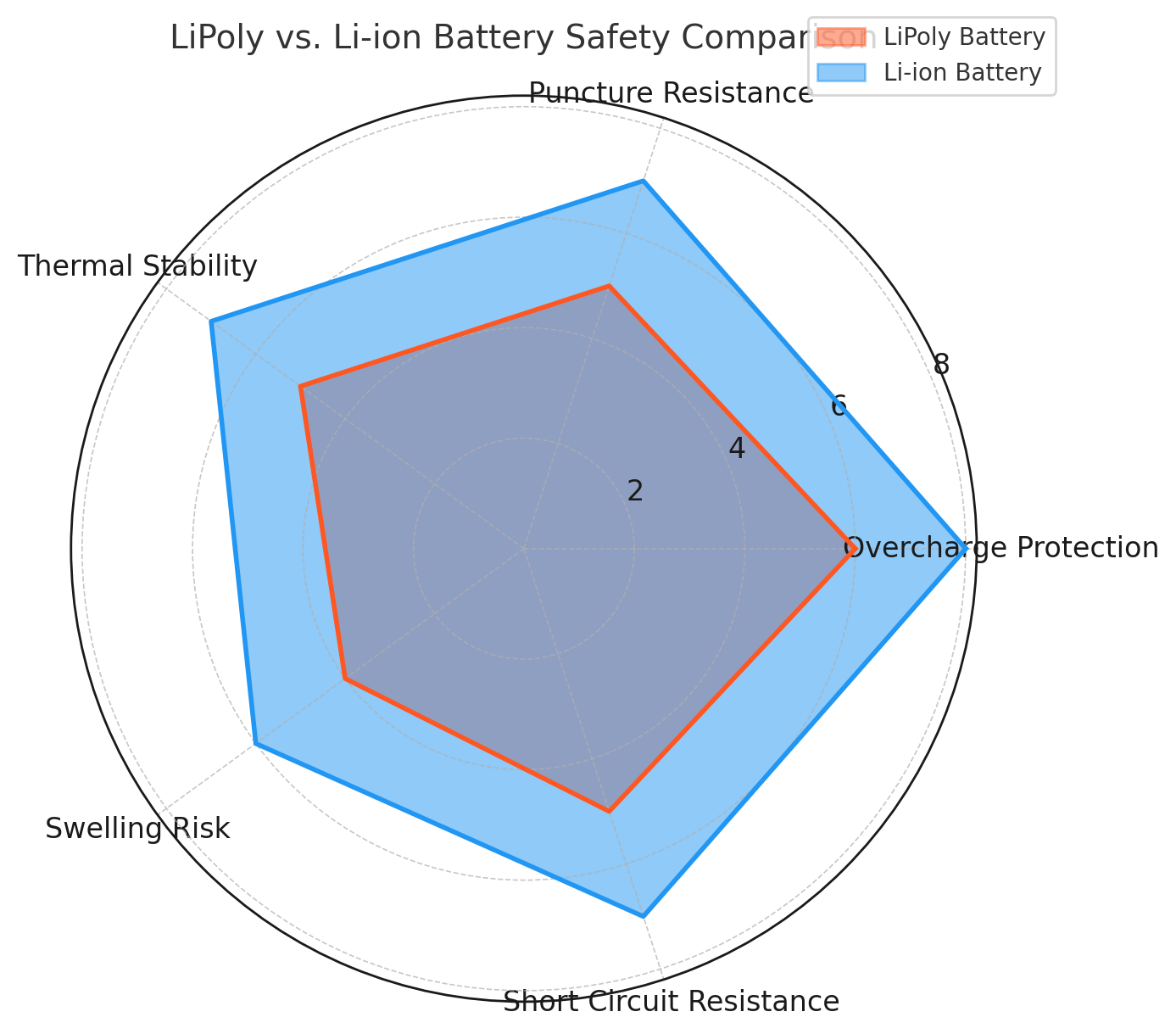
LiPoly batteries are safe when properly handled. However, improper use—such as overcharging, puncturing, or overheating—can pose risks due to the soft pouch design.
✅ Best Safety Practices:
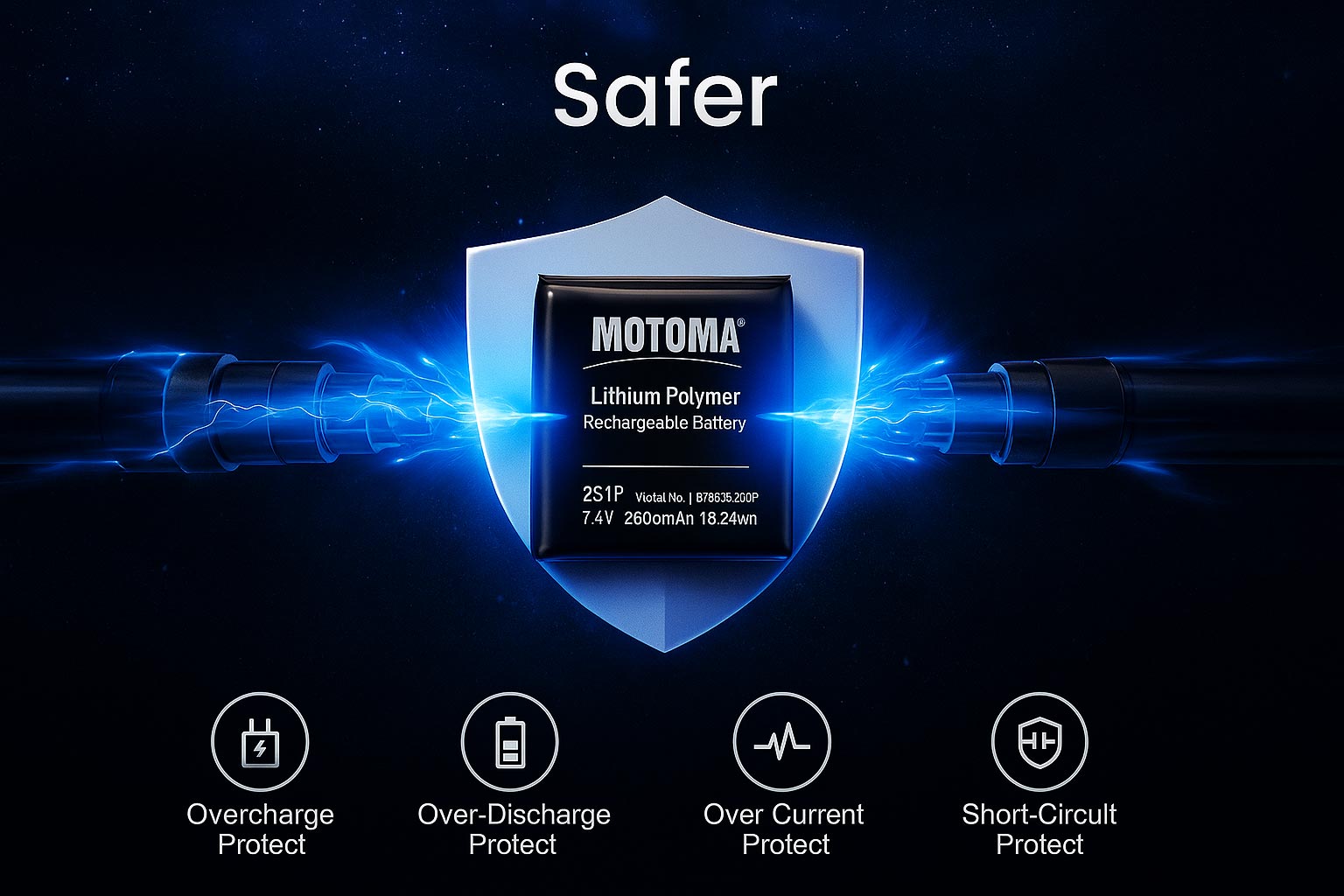
Use compatible chargers with overcharge protection
Avoid deep discharges below 3.0V per cell
Store at room temperature in a fireproof container
Regularly inspect for swelling, damage, or wear
⚠ Common Hazards:
Thermal Runaway: Triggered by internal overheating
Swelling: Often caused by overcharging or battery aging
Short Circuits: Can lead to fires if not protected
According to the 2024 Battery Safety Council, over 85% of LiPoly battery failures were due to user misuse—making battery education a top priority.
🌡 Future of LiPoly Batteries: Wide Temperature & Safer Chemistries
As industries demand reliable power in extreme environments, wide-temperature LiPoly batteries are on the rise. These custom-built batteries operate from -20°C to 70°C and feature enhanced insulation and thermal management.
🔍 Next-Gen Innovation:
Solid-state polymer electrolytes are being developed to replace flammable liquid electrolytes, significantly enhancing safety across applications.
👷♂️ Why Engineers Prefer LiPoly Batteries
For hardware designers and electronics engineers, choosing the right battery is a balance between power, safety, size, and efficiency. LiPoly batteries check all the boxes:
Key Reasons LiPoly Is a Top Engineering Choice:
Flexible Form Factor: Fits slim and curved enclosures for wearable tech
Lightweight: Ideal for drones and portable devices
Stable Discharge Rate: Maintains consistent output during full cycles
OEM/ODM Customization: Tailored voltage, capacity, and connectors available
BMS Integration: Supports advanced protection for over-voltage, temperature, and short-circuit scenarios
“When we were prototyping a smart doorbell with AI and Wi-Fi, only a wide-temperature LiPoly battery could meet our design and safety requirements—no compromises.”
— Lead Hardware Engineer, IoT Startup in Germany✅ Conclusion: A Smart Power Choice for Modern Electronics
LiPoly batteries offer a lightweight, flexible, and powerful solution for today’s compact electronic devices. Their high energy density and customizable form make them a favorite in everything from wearables to smart sensors.
However, like all lithium-based batteries, safe handling is essential. By understanding LiPoly battery applications, safety practices, and design flexibility, developers and consumers alike can ensure optimal performance and reliability.