
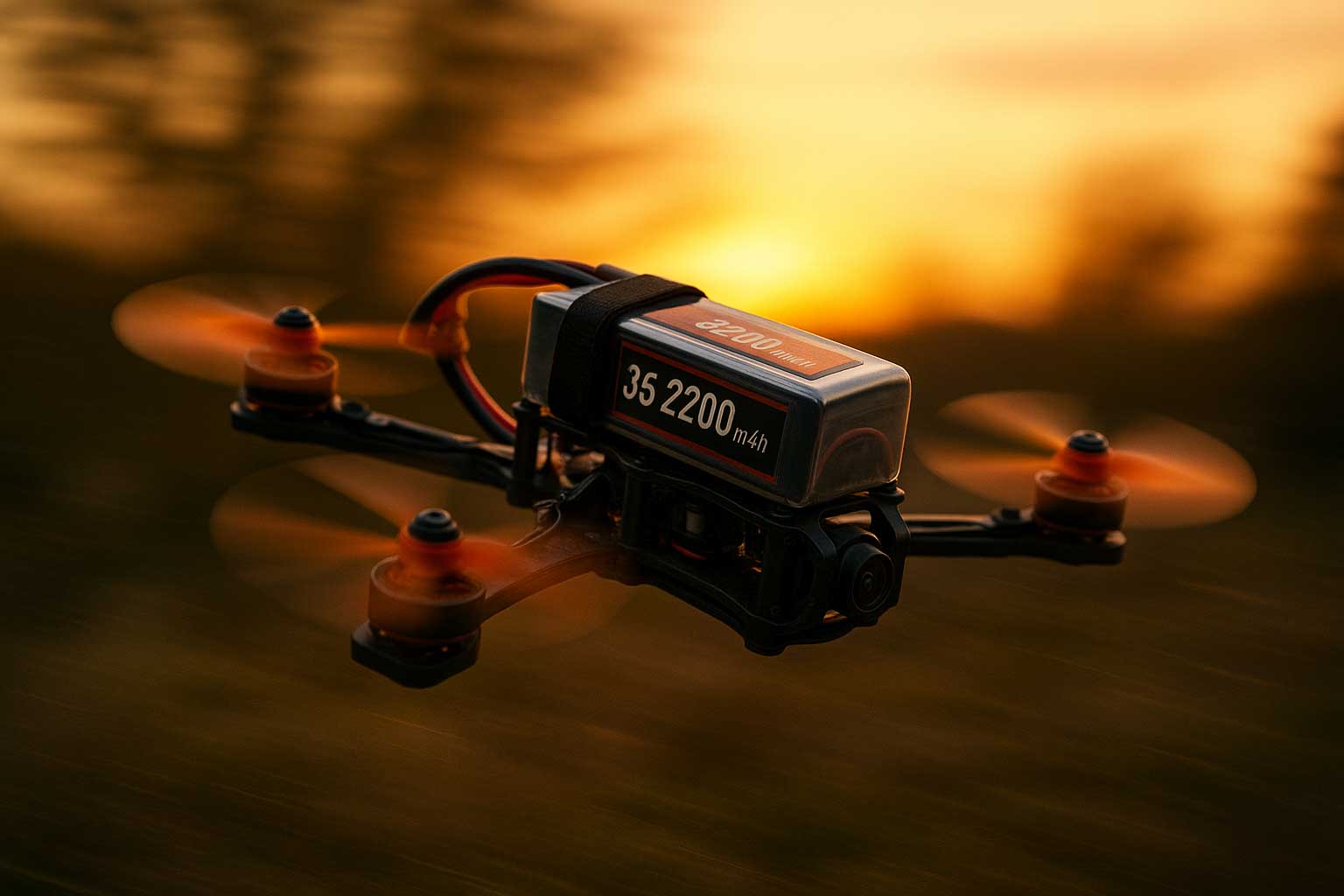
Among lithium polymer (LiPo) batteries, the 2200mAh pack stands out as one of the most popular and versatile options. It’s widely used in RC drones, cars, airplanes, and portable electronics because of its ideal balance between capacity, size, and power output. But not all 2200mAh LiPo batteries are the same — their voltage ratings significantly affect performance, charging behavior, and applications. Let’s break down what makes each voltage platform unique and how to choose the right one for your needs.
1. What “2200mAh” Really Means

The 2200mAh specification refers to the battery’s capacity — it can theoretically deliver 2200 milliamps (2.2 amps) continuously for one hour before running out of charge. In practice, the usable capacity depends on the C-rate (discharge rate), temperature, and load conditions. For example, a 2200mAh 30C LiPo can safely discharge at up to 66A (30 × 2.2A).
2. Voltage Platforms and Their Characteristics
LiPo batteries are made up of individual cells with a nominal voltage of 3.7V each. The total voltage depends on how many cells are connected in series (S). Here’s how different configurations work:
• 1S (3.7V) LiPo 2200mAh
- Applications: Small electronics, wearables, IoT devices.
- Features: Lightweight and compact, typically under 50g.
- Charging voltage: Up to 4.2V max per cell.
- Limitations: Low power output; not suitable for high-current RC devices.
• 2S (7.4V) LiPo 2200mAh
- Applications: RC cars, FPV drones, and robotics projects.
- Features: Delivers more torque and speed compared to a 1S battery.
- Weight: Around 100–120g, depending on the brand and discharge rate.
- Performance tip: Often paired with 20C–50C ratings for balanced power and runtime.
• 3S (11.1V) LiPo 2200mAh
- Applications: Medium-sized drones, airplanes, and RC helicopters.
- Features: Offers strong power output, excellent for high-thrust motors.
- Weight: 180–200g, with high discharge support (up to 100C in some models).
- Note: This is the most common 2200mAh LiPo configuration for aerial applications.
• 4S (14.8V) and Higher
- Applications: Racing drones, high-performance RC planes, power tools.
- Features: High voltage translates to faster response and greater acceleration.
- Considerations: Requires ESCs (electronic speed controllers) and motors rated for higher voltages.
3. Chemistry and Design Innovations

Modern 2200mAh LiPo batteries use advanced electrolyte formulations that allow fast charging (up to 3C rates) and stable voltage output under heavy loads. Some premium models use graphene-enhanced cathodes or high-conductivity separators to reduce internal resistance, improving both power delivery and lifespan.
Temperature control is crucial. Integrated protection circuits (PCM/BMS) and smart balancing chargers help prevent overcharging, over-discharging, and swelling — the common causes of LiPo degradation.
4. Performance Comparison
Below is a simplified comparison chart showing how voltage affects key performance metrics for 2200mAh LiPo batteries:
| Configuration | Nominal Voltage (V) | Typical Discharge Rate (C) | Max Continuous Power (W) | Typical Applications |
|---|---|---|---|---|
| 1S | 3.7 v | 15–25 | 8–20 | Wearables, IoT |
| 2S | 7.4 V | 20–50 | 30–80 | RC cars, robots |
| 3S | 11.1 V | 30–100 | 100–250 | Drones, planes |
| 4S+ | 14.8V –22.2 V | 35–120 | 200–500+ | Racing drones, power tools |
5. Charging and Maintenance Tips
- Always use a LiPo balance charger and set the correct cell count (1S–4S).
- Never discharge below 3.0V per cell — this can permanently damage the battery.
- Store partially charged (around 3.8V per cell) when not in use for long periods.
- Inspect regularly for swelling or physical damage, and dispose of defective packs properly.

Conclusion
The 2200mAh LiPo battery remains a gold standard for hobbyists and professionals alike. Whether you’re flying a drone, driving an RC car, or powering a portable device, understanding its voltage platform helps you achieve the perfect balance between power, runtime, and safety. With ongoing improvements in materials, electrolytes, and protection systems, the modern LiPo 2200mAh battery is more reliable and efficient than ever before.
FAQs about 2200mAh LiPo Batteries
- Q1: Can I charge a 3S 2200mAh LiPo with a 2S charger?
A: No. Always match your charger’s cell count with the battery’s voltage configuration to avoid fire or damage. - Q2: How long does a 2200mAh LiPo last per charge?
A: It depends on the load — around 6–15 minutes for drones and up to several hours for low-drain electronics. - Q3: What’s the safe storage voltage for LiPo batteries?
A: About 3.8V per cell is ideal for long-term storage. - Q4: How do I know if my LiPo battery is going bad?
A: Swelling, high self-discharge, or significantly reduced runtime are warning signs of aging cells. - Q5: Are graphene LiPo batteries better?
A: Yes, graphene-enhanced LiPos usually offer lower internal resistance, faster charging, and longer life cycles, though they can cost more.
Why MOTOMA LiPo Batteries?
- Precision Fit: Width 15–110mm | Thickness 0.9–12mm | Height 20–165mm – tailored to your device
- High Energy Density: Up to 620 Wh/L for longer-lasting power
- Wide Temperature Range: Operates from -40°C to +85°C without compromise
- Fast Charging: Up to 3C charge rate – rapid energy when you need it
- High Discharge Capability: Up to 10C for performance-driven devices
- Trusted Worldwide: Powering smart wearables, medical devices, IoT, and security solutions
In the race for innovation, every millimeter and every milliamp-hour counts. With MOTOMA, you get a battery that is engineered for your product – delivering the energy, stability, and endurance that world-class brands trust.
Let’s power your next breakthrough.
Contact MOTOMA today.